California's beauty isn't a secret, but knowing where to find its most stunning spots without getting lost in the crowds is. Forget the generic lists. After years of exploring every corner, from hidden coves to alpine meadows most tourists miss, I've narrowed it down to the ten places that genuinely take your breath away. This isn't just about scenery; it's about the feeling you get when you're there. We'll cover the iconic must-sees and a few you might not have considered, with the practical details you need to plan a trip you'll remember forever.
Your California Beauty Roadmap
- 1. Yosemite Valley: The Iconic Cathedral
- 2. Big Sur Coastline: Where Mountains Meet the Sea
- 3. Lake Tahoe: The Alpine Sapphire
- 4. Redwood National & State Parks: Giants in the Mist
- 5. Death Valley National Park: Stark & Surreal Beauty
- 6. Monterey Bay & 17-Mile Drive
- 7. Napa Valley: Vineyard Vistas
- 8. Joshua Tree National Park: Desert Dreamscape
- 9. Channel Islands National Park: California's Galapagos
- 10. Muir Woods National Monument
- How to Plan Your California Beauty Trip
- California Travel Questions Answered
1. Yosemite Valley: The Iconic Cathedral
Let's start with the heavyweight. Yosemite Valley is the postcard image of California for a reason. But most people make the mistake of just staring at El Capitan from the car window and calling it a day. The real magic happens when you engage with it.
Tunnel View at sunrise is a cliché for a reason—it's stunning. But for a less crowded, equally powerful perspective, drive to Valley View late in the afternoon. The light on El Capitan and Cathedral Rocks, reflected in the Merced River, is something else.
Yosemite Valley Essentials
Address & Entry: The main entrance is via CA-120, CA-140, or CA-41. A 7-day vehicle pass costs $35. Reservations are often required in peak season (roughly May-October)—check the National Park Service website months ahead.
Best Time: Late spring (May-June) for roaring waterfalls. Fall (October) for fewer crowds and golden colors. Winter is quiet and magical if you're prepared for snow.
Don't Just Look, Hike: Even a short walk makes a difference. The Mist Trail to Vernal Fall (1.6 miles round trip to the footbridge) gets you into the spray. For a panoramic view with moderate effort, the hike to Columbia Rock (2 miles round trip) on the Yosemite Falls Trail is a local secret.
2. Big Sur Coastline: Where Mountains Meet the Sea
Driving California State Route 1 through Big Sur is a rite of passage. The drama of the Santa Lucia Mountains plunging into the Pacific is relentless. But pulling over at every turnout is exhausting. Focus on a few key spots.
McWay Falls in Julia Pfeiffer Burns State Park is the iconic 80-foot waterfall onto a beach. It's beautiful, but it's also the most crowded spot on the coast. Go early, right when the park opens, or late in the day. For a more immersive experience, hike the Partington Cove trail. It's a short, shady hike down to a rocky inlet with a tunnel—you feel like you've discovered a pirate hideout.
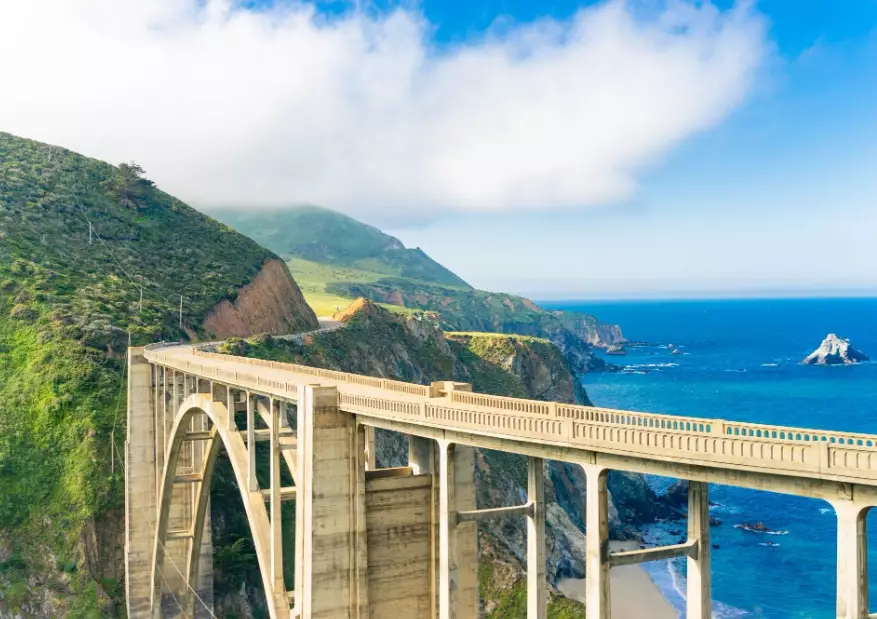
Bixby Creek Bridge is magnificent. The classic photo is from the north turnout. For a different angle, continue south a bit and pull over. You'll get the bridge with the coastline stretching behind it.
3. Lake Tahoe: The Alpine Sapphire
Tahoe's water is that impossible shade of blue for a scientific reason: the lake's depth and purity. In summer, it's a playground. In winter, a snowy wonderland. The mistake? Sticking only to the bustling south shore (Stateline) or north shore (Tahoe City).
For the Best Views: Drive up to Emerald Bay State Park. The vista from the Eagle Falls parking area is iconic. Hike down to Vikingsholm castle (a steep 1-mile descent) to see the bay from water level. On the east shore, Sand Harbor has the clearest water and dramatic boulders, but get there by 8 AM in summer or you won't get in.
In winter, the beauty shifts. Consider a snowshoe tour with a naturalist from the Tahoe Rim Trail Association for silent, snowy forests and lake views.
4. Redwood National & State Parks: Giants in the Mist
This isn't one park but a complex of state and federal lands in Northern California. The scale here is humbling. The common error is to drive the Newton B. Drury Scenic Parkway, see some big trees, and leave. To feel the ancient silence, you need to walk among them.
Skip the Most Famous Tree: The "Drive-Thru Tree" is a tourist trap that damages the trees. Instead, head to Prairie Creek Redwoods State Park. Walk the Fern Canyon Loop Trail (1 mile). You'll wade through a creek (waterproof shoes!) between 50-foot fern-covered walls—it feels prehistoric. For towering giants, the Stout Grove in Jedediah Smith Redwoods State Park is a flat, easy loop through some of the most impressive stands.
The coastal fog is part of the experience. It creates the damp, mystical atmosphere the redwoods need. Don't be disappointed by it—embrace it.
5. Death Valley National Park: Stark & Surreal Beauty
Beauty here is harsh, minimal, and utterly captivating. It's about vastness, color, and geological drama. Visiting in peak summer is a dangerous mistake. Aim for November to March.
Must-Sees: At sunrise, go to Zabriskie Point. The badlands glow gold and pink. Artist's Palette is best in the late afternoon sun when the mineral-stained hillsides show their full range of pinks, greens, and purples. Drive the one-way Artist's Drive to see it.
The real magic is at night. Death Valley is a Gold Tier International Dark Sky Park. The Milky Way is often visible to the naked eye. Stay at the Furnace Creek or Stovepipe Wells campgrounds for easy access to dark sky viewing areas.
6. Monterey Bay & 17-Mile Drive
Monterey Bay combines wild coastline with incredible marine life. The 17-Mile Drive through Pebble Beach is famous, but paying the $11.25 entrance fee just to see the Lone Cypress is missing the point.
Combine it. Start at the Monterey Bay Aquarium (a world-class institution focusing on local ecosystems) to understand what you're about to see. Then, walk the Coastal Trail from Fisherman's Wharf towards Pacific Grove. You'll see sea otters, harbor seals, and crashing waves for free.
Then, do the 17-Mile Drive. Key stops: Bird Rock (covered in seabirds and sea lions), The Restless Sea overlook for powerful waves, and yes, The Lone Cypress. It's a symbol of resilience. The drive ends in Carmel-by-the-Sea, a storybook village perfect for wandering.
7. Napa Valley: Vineyard Vistas
The beauty here is cultivated—rolling hills meticulously patterned with vines, framed by the Mayacamas Mountains. It's serene and luxurious. The mistake is spending all your time inside tasting rooms.
Get a view. Many wineries have stunning vistas. Castello di Amorosa Get a view. Many wineries have stunning vistas. Castello di Amorosa (a medieval-style castle) offers great views from its towers. Artesa Vineyards & Winery is built into a hilltop with panoramic views of the Carneros region. For a free, breathtaking panorama, drive up to the Napa Valley Welcome Sign on the hill off of Highway 29/128. Or, take the Napa Valley Wine Train for a moving view of the vineyards without worrying about driving. Timing is everything. The valley is most visually stunning in the fall (harvest season, Sept-Oct) when the vines turn gold and red, or in the spring (April-May) when everything is lush and green. Summer can be hazy and very hot. This park is a surrealist painting come to life—grotesquely beautiful Joshua Trees, massive granite boulders, and wide-open desert skies. The error is trying to "do" it in a day from Los Angeles. Stay at least one night to experience the sunset and stars. The key areas are different. The West Entrance (near Joshua Tree town) has the densest forests of the namesake trees and famous rock formations like Hidden Valley and Keys View (for panoramic desert vistas). The North Entrance (near Twentynine Palms) gives access to the Cholla Cactus Garden, which glows in the morning or evening light. Sunset at Arch Rock or Skull Rock is spectacular. Then, as darkness falls, the park transforms into one of Southern California's best stargazing spots. The lack of light pollution reveals a breathtaking canopy of stars. This is beauty defined by isolation and unique wildlife. Five islands sit off the coast of Ventura and Santa Barbara. You can't drive there—you need to take a boat (Island Packers is the main concessionaire) or fly. That filter keeps the crowds away. Santa Cruz Island is the most popular for day trips. The boat ride itself often includes dolphins and whales. Once there, hike to Cavern Point for cliffs covered in wildflowers (in spring) and views back to the mainland. Scorpion Canyon is another great hike. This is for the adventurous. There are no services, shops, or restaurants. You bring in all your food and water and pack out all trash. The reward is seeing island foxes, enormous sea lion colonies, and vistas that feel a world away from California. A cathedral of old-growth coast redwoods just 12 miles north of the Golden Gate Bridge. Its accessibility is its blessing and its curse—it gets extremely crowded. Reservations are mandatory for both parking and shuttle access. Book them well in advance on Recreation.gov. The biggest mistake is arriving without one; you will be turned away. To escape the crowds on the main boardwalk loop, take any of the longer trails that climb up the hillsides. The Ocean View Trail connecting to the Fern Creek Trail loop (about 3 miles) gets you away from the masses and into quieter, sun-dappled groves. Go on a weekday if possible, or arrive right at opening time (8 AM). California is massive. Trying to see all ten places in one trip is a recipe for exhaustion. Group them by region. General rule: Always check for reservations. National parks, popular state parks, even parking—many require advance booking, especially from May through September. Assume you need one and you'll avoid disappointment.8. Joshua Tree National Park: Desert Dreamscape
9. Channel Islands National Park: California's Galapagos
10. Muir Woods National Monument
How to Plan Your California Beauty Trip
Region
Places to Combine
Recommended Trip Length
Key Tip
Northern Coast & Redwoods
Redwood Parks, Muir Woods, maybe Napa
5-7 days
Fly into San Francisco (SFO) or Sacramento (SMF). Book Muir Woods parking NOW.
Central Coast & Sierra
Big Sur, Monterey, Yosemite
7-10 days
Check Highway 1 road conditions for Big Sur. Book Yosemite lodging/accommodations a year in advance.
Southern Deserts
Death Valley, Joshua Tree, Channel Islands
6-8 days
Visit Death Valley & Joshua Tree Oct-April only. Channel Islands trips depend on boat schedules.
Lake & North State
Lake Tahoe, with a potential extension to Lassen Volcanic NP
4-6 days
Summer for hiking/water, Winter for skiing. South Lake is more developed; West Shore is quieter.
California Travel Questions Answered

Comments
Leave a Comment