Quick Navigation
- So, What is the 5 4 3 Rule for Packing, Exactly?
- Why Bother? The Real Benefits Beyond Saving Space
- How to Actually Make the 5 4 3 Rule Work: A Step-by-Step Plan
- Tailoring the Rule: It's Not One-Size-Fits-All
- Your 5 4 3 Packing Checklist & Common Pitfalls
- Answering Your Burning Questions (The FAQ Section)
- The Bottom Line: Is the 5 4 3 Rule for Packing Worth It?
Let's be honest. We've all been there. Staring at an overflowing suitcase an hour before leaving for the airport, sitting on it to force the zipper closed, and praying the scale at check-in is broken. You pack for every possible scenario—a fancy dinner, a sudden downpour, a spontaneous hike—only to wear the same three outfits on repeat. The luggage fee alone could have paid for a nice meal. Sound familiar?
I used to be the king of overpacking. My strategy was "just in case." Just in case it gets cold. Just in case we go somewhere nice. Just in case I spill something. It was exhausting. Then, on a forum for budget travelers, I kept seeing this phrase pop up: the 5 4 3 rule for packing. At first, I dismissed it. Only 12 items for a whole trip? No way. It sounded more like a minimalist fantasy than practical advice.
But after one too times dragging a 50-pound monster through a cobblestone European alley, I got desperate enough to try it. And you know what? It changed how I travel. Completely. So, let's cut through the noise and really break down what the 5 4 3 rule for packing is, why it works when you think it won't, and how you can make it work for you, even if you're not a packing ninja.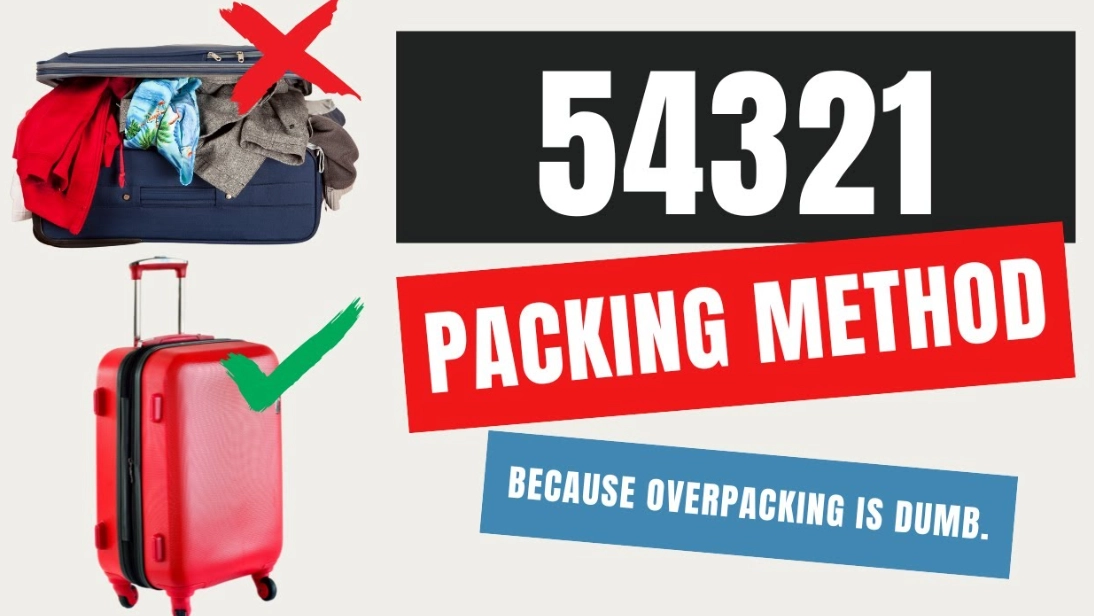
So, What is the 5 4 3 Rule for Packing, Exactly?
It's dead simple. The 5 4 3 rule is a minimalist packing guideline designed to limit decision fatigue and luggage bulk. The core numbers are: 5 tops, 4 bottoms, and 3 pairs of shoes. That's your core wardrobe for the trip, not including what you wear on the plane or train. Some variations include accessories or outerwear, but the heart of the rule is in those three numbers. It forces you to think in terms of mix-and-match outfits rather than individual items.
The goal isn't to suffer. The goal is freedom. Freedom from heavy bags, from waiting at baggage claim, from worrying about your stuff. When you understand what the 5 4 3 rule for packing truly is, you see it's less about restriction and more about smart curation.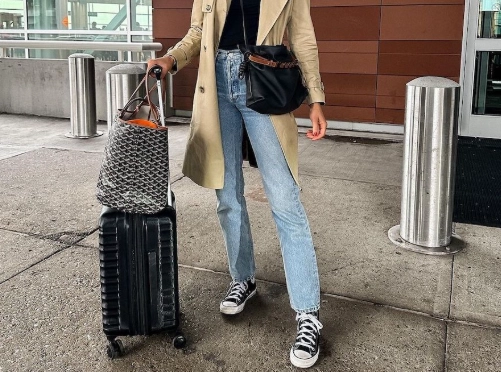
Why Bother? The Real Benefits Beyond Saving Space
Anyone can tell you to pack less. But the 5 4 3 rule gives you a framework, and that framework comes with some surprising perks you might not have considered.
First, the obvious one: you can almost always stick to a carry-on. This is huge. You save money on checked bag fees, which airlines seem to hike every other month. You save time by skipping the check-in desk and the agonizing wait at the carousel. Your bag is also less likely to get lost by the airline. I can't tell you the peace of mind that comes from knowing your stuff is always with you.
Then there's the mental load. Ever spent 20 minutes in a hotel room deciding what to wear? With a limited, pre-coordinated capsule, you have maybe three good choices. You get dressed in two minutes and get on with your day. Your brainpower is better spent figuring out which café has the best croissants.
There's also a practical side. Less stuff means less to keep track of, less to wash when you get home, and less to repack if you're moving between cities. It makes you more mobile and adaptable.
My first test was a 10-day work-leisure trip to two cities with different climates. I was skeptical. But limiting myself to the 5 4 3 rule for packing forced me to choose versatile, neutral pieces. I had a blazer that worked for meetings and dinners, a pair of dark jeans that were presentable enough, and shoes that were comfortable for walking but didn't look like gym shoes. I didn't miss a single thing I left behind.
How to Actually Make the 5 4 3 Rule Work: A Step-by-Step Plan
Okay, theory is great. But how do you translate "5 tops, 4 bottoms" into a real suitcase? This is where people get stuck. It's not random. It's strategic.
The Core Philosophy: Building a Travel Capsule Wardrobe
Think of your 12 items as a team. Every player needs to work well with multiple others. This means leaning heavily on a cohesive color palette. Choose one or two base colors (like black, navy, grey, khaki) and one or two accent colors. Your tops should all go with most of your bottoms. It sounds basic, but look in your closet right now. How many of your tops only work with one specific pair of pants?
Here’s a breakdown of what those numbers could look like for a typical 7-10 day trip. This isn't a strict prescription, but a template you can adapt.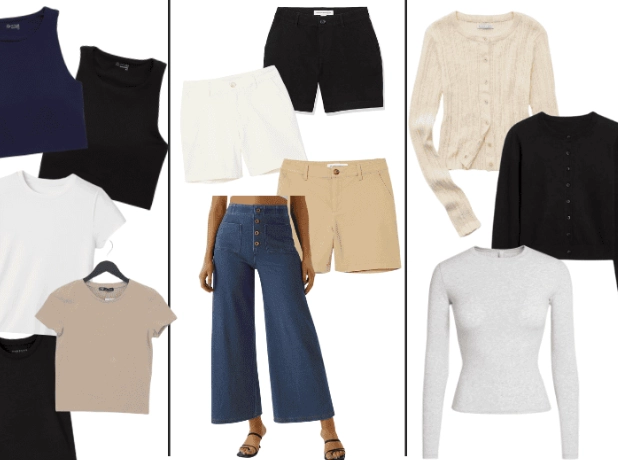
| Category | Item Examples (Mix & Match Focus) | Why It Works |
|---|---|---|
| 5 Tops | 2x T-shirts (neutral), 1x Blouse/Button-down, 1x Long-sleeve knit (e.g., sweater), 1x Tank or casual top | Provides layers for temperature changes and variety for day/night. The knit and button-down can layer over tees. |
| 4 Bottoms | 1x Jeans, 1x Trousers/Chinos, 1x Shorts/Skirt, 1x Comfortable pants (e.g., leggings or travel pants) | Covers most activities: casual, smart-casual, warm weather, and travel/relaxation. |
| 3 Shoes | 1x Comfortable walking shoes, 1x Versatile casual shoes (e.g., clean sneakers, loafers), 1x Dressier option (sandals or flats) | Footwear is bulky. This covers walking, everyday wear, and a nicer occasion without overloading. |
See how that works? You're not just throwing in five random shirts. You're building a system. The exact items shift based on your destination and style. A beach trip will swap trousers for another pair of shorts. A business trip might swap a t-shirt for another button-down.
What About Everything Else? (The Unsung Heroes)
Now, the big question everyone has when they first learn what the 5 4 3 rule for packing is: "What about underwear, socks, pajamas, and a jacket?" Good news. These are considered separate from the core 12. They are non-negotiables, but they have their own mini-rules.
- Underwear & Socks: Pack one for each day, plus one extra. Merino wool socks are a game-changer—they resist odor and can be worn multiple times.
- Sleepwear: One set. Keep it light.
- Outerwear: One versatile jacket or coat suitable for the expected weather. Wear your bulkiest one on the plane.
- Accessories: Scarves, belts, jewelry. These are power players! A scarf can change an outfit's look and double as a blanket. A belt can smarten up jeans. They take up negligible space for a big style impact.
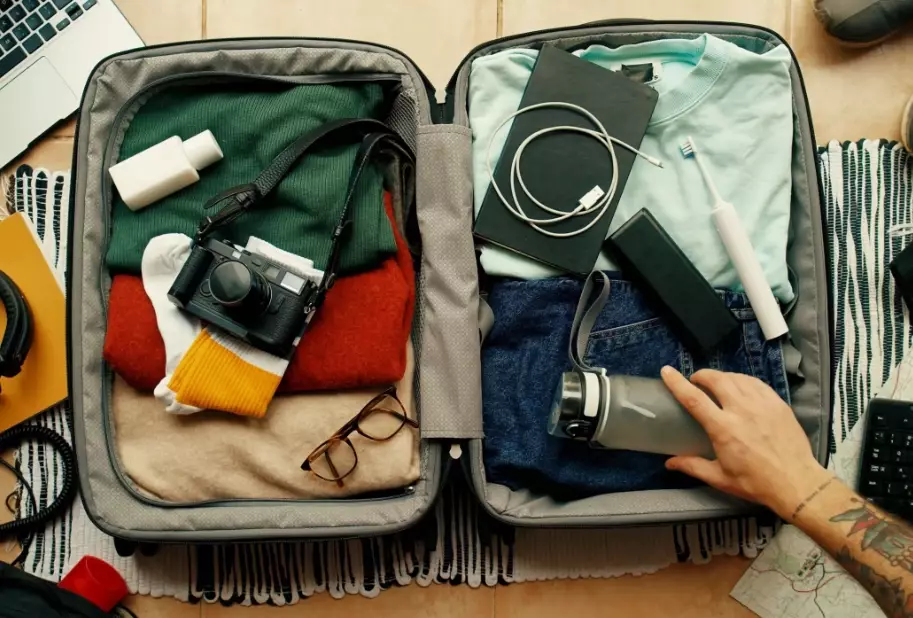
Pro Tip: Your "wear-on-the-plane" outfit is your secret weapon. Wear your bulkiest shoes and jacket, and even one of your heavier bottoms (like jeans). This effectively gives you an extra item without using suitcase space.
Tailoring the Rule: It's Not One-Size-Fits-All
The classic 5 4 3 rule is a perfect starting point for a city break or general leisure travel. But life isn't always classic. Here’s how to bend the rules without breaking them.
For Cold Weather: The 5 4 3 rule for packing can feel tight when you need sweaters and thermals. The key is to consider your base layers (thermals) as underwear—they're separate. Your "tops" become mid-layers: think two sweaters, two long-sleeve tops, and one fleece. Bottoms might be two pairs of pants and two base-layer leggings. Shoes become sturdy boots, casual shoes, and maybe indoor slippers.
For Business Travel: The numbers might shift to a "4 3 3" or "5 3 3" focus. More tops (blouses, shirts) to rotate with fewer bottoms (two pairs of tailored pants, one skirt). Shoes are critical: polished flats/low heels, smart loafers, and your travel sneakers.
For a Beach Vacation: This is where the rule shines. Tops become tanks, tees, and cover-ups. Bottoms are shorts, skirts, and one pair of linen pants for evening. Shoes are sandals, flip-flops, and one pair of nicer sandals or espadrilles.
The principle of the 5 4 3 rule for packing—curation and versatility—applies everywhere. The specific numbers are your servants, not your masters.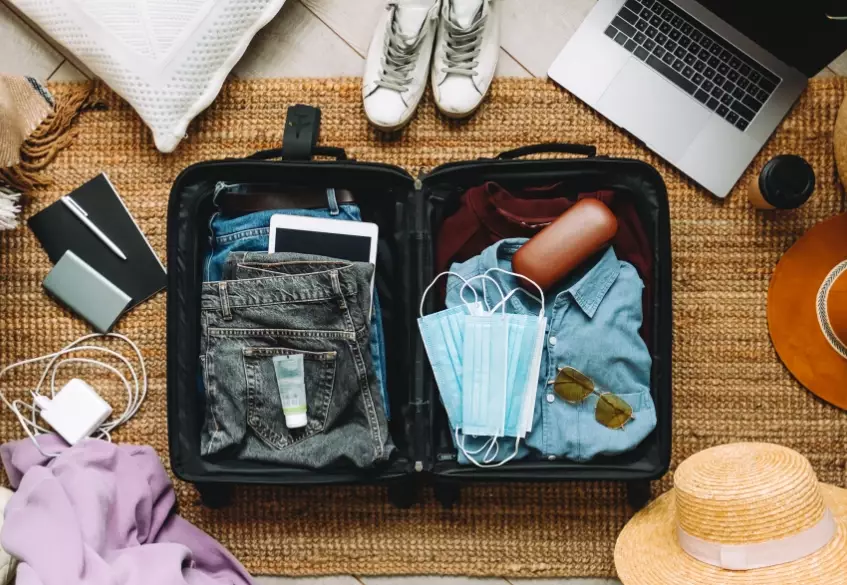
Where the Rule Might *Not* Work (And That's Okay)
Let's be real. It's not a magic spell. If you're going on a hiking trip where you need technical gear for different altitudes and conditions, you'll need more specialized items. A formal wedding requiring specific attire is another exception. The rule is best for general travel where your daily activities are somewhat varied but not hyper-specialized. It's a guideline for 80% of trips, not 100%.
Your 5 4 3 Packing Checklist & Common Pitfalls
Before you zip up, run through this mental checklist. These are the mistakes I made so you don't have to.
- Have I chosen a color scheme? Lay everything on the bed. Does it all look like it belongs together?
- Can each top work with at least 3 of the bottoms? Do a quick mental outfit check. If a top only works with one bottom, it's likely a weak link.
- Are my shoes truly versatile? That "dressier" option should still be walkable. Blister-inducing shoes have ruined more trips than bad weather.
- Have I packed for the reality of the trip, or my fantasy? Be brutally honest. Are you really going to that opera, or will you be happily exhausted from sightseeing by 8 PM?
- Did I remember the extras? Don't forget a swimsuit if there's a pool, or a compact umbrella for rainy destinations.
A major pitfall is forgetting about laundry. For trips longer than a week, planning to do one load of laundry is the secret to making the 5 4 3 rule for packing work indefinitely. A sink, some travel detergent, and a drying line are all you need. Many hotels offer laundry services too.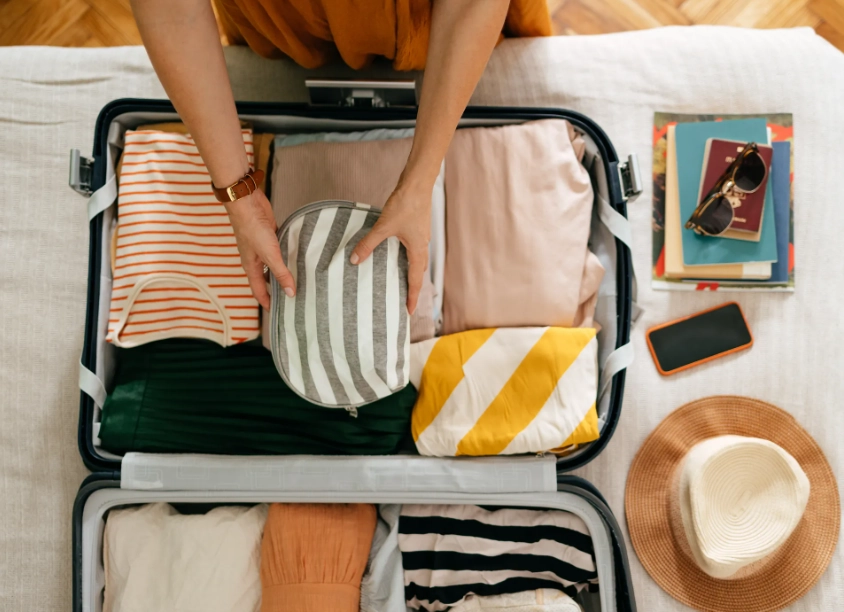
Answering Your Burning Questions (The FAQ Section)
Does the 5 4 3 rule include what I wear on the plane?
No, and this is a crucial detail. The rule applies to what goes *in* your suitcase. The outfit you board in is a freebie. Use it strategically for bulky items.
What about toiletries and electronics?
Completely separate. For toiletries, decant into small travel containers. Remember the TSA's 3-1-1 rule for carry-on liquids (containers 3.4oz/100ml or less, all in one 1-quart bag). You can find the official details on the TSA website. For electronics, only bring what you'll genuinely use. That extra tablet "just in case" usually just adds weight.
Can I use this rule with kids?
You can apply the philosophy! Kids get messy, so you might need a higher ratio of tops to bottoms. Think more in terms of outfits per day with a few spares, but still try to limit colors and styles to maximize mix-and-match potential. It's harder, but focusing on a capsule for them too cuts down on chaos.
Is the 5 4 3 rule only for carry-on?
It's designed for it, but it's brilliant even if you check a bag. It prevents overpacking a large suitcase, leaving room for souvenirs or just making your bag lighter to lift. The mental benefits are the same.
The Bottom Line: Is the 5 4 3 Rule for Packing Worth It?
Look, it's not for everyone. If your greatest joy in travel is having a different fabulous outfit for every Instagram post, this will feel restrictive. But for most of us, travel is about the experience *outside* the hotel room.
Adopting the 5 4 3 rule for packing is a shift in mindset. It moves you from packing for fear of not having something to packing with confidence in what you've chosen. It turns packing from a stressful chore into a quick, almost satisfying puzzle.
My advice? Try it on your next trip, even a weekend getaway. Be strict. See how it feels. The worst that happens is you wear an outfit twice. The best that happens is you discover the lightness—both literal and figurative—of traveling with less. You might just find that understanding what the 5 4 3 rule for packing really is, is the first step to a smoother, simpler, and more enjoyable adventure.
And honestly, if you forget something? You can probably buy it there. That's part of the adventure too.





Comments
Leave a Comment