What You'll Find
- Your Visa vs. Your I-94: The Two-Part System Explained
- The Magic Number: What's a "Normal" Admitted Period?
- Can You Extend Your Stay Beyond the I-94 Date?
- The Perils of Overstaying: What Happens If You Stay Too Long?
- Common Scenarios and Your Questions Answered
- Your Action Plan: Before, During, and After Your Trip
- Final Thoughts: It's About the Date, Not the Visa
You got your U.S. tourist visa, booked your flights, and you're ready to go. Fantastic. But then this question pops into your head, and it's a big one: how long can I actually stay in the U.S. on this tourist visa? It seems like it should be simple, right? The visa says it's valid for 10 years, so surely you can stay for... ten years? Not even close. That's where most people get tripped up right from the start.
I remember talking to a friend who was planning a six-month road trip across America. He had his B-2 visa and just assumed the 10-year validity was his permission to stay. He was shocked when I explained the reality. It's a classic mix-up, and honestly, the way the visa is designed doesn't make it any easier to understand.
The truth is, figuring out how long you can stay in the U.S. on a tourist visa involves two separate things that often get confused: your visa's validity and your permitted period of stay. They are not the same animal. Not even a little bit. Let's break it down so you don't end up making a costly mistake.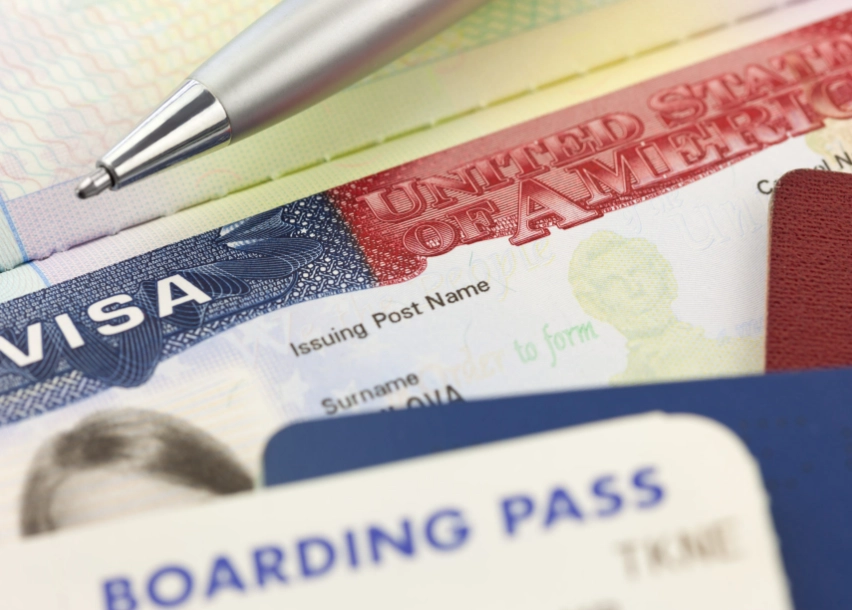
Your Visa vs. Your I-94: The Two-Part System Explained
Okay, let's get into the nuts and bolts. This is the core of understanding your stay.
First, the Visa (B-1/B-2). This is the physical sticker in your passport. For many nationalities, it's issued for multiple entries over a period of 10 years. That 10-year mark? That's just how long the *visa itself* is valid for you to use to request entry at a port of entry. It's your ticket's expiration date, not the length of the show.
Second, the I-94 Arrival/Departure Record. This is the golden ticket. This is the official record that states your legal status in the U.S. and, crucially, the date by which you must depart. In the past, it was a little white paper card stapled into your passport. Now, it's almost entirely electronic. You can retrieve it online at the official CBP I-94 website. When you ask yourself, "how long can I stay in the U.S. on my tourist visa?", the answer is on your I-94. Look for the "Admit Until Date." That's your hard deadline.
What Does "Duration of Status" (D/S) Mean?
Here's another curveball. For some visitors (like most Canadians, for instance), and for certain other visa types, the I-94 might not show a specific "Admit Until Date." Instead, it says "D/S" – Duration of Status. This means you can stay as long as you maintain your primary status (e.g., as a tourist). However, for a standard B-2 tourist visa holder from most countries, you will almost always get a specific date. D/S is less common for straightforward tourist visits.
The Magic Number: What's a "Normal" Admitted Period?
So, what date does the CBP officer actually put on that I-94? There's no one-size-fits-all answer, which is why this question is so common. The officer has discretion, but they operate under a standard framework.
The default and most common period granted is six months (180 days). If you're coming for a typical vacation of a few weeks or even a couple of months, you'll likely get the full six months stamped on your I-94 without any issue. The officer might not even say a word about it.
But—and this is a big but—it is not automatic. The officer is required to grant only the amount of time they believe is necessary and reasonable for you to accomplish your stated purpose. Coming for a two-week Disneyland trip? They might still give you six months, or they might note the shorter trip. The law gives them that flexibility.
I've heard stories from readers where an officer, after a brief conversation about visiting family for a month, only granted a 60-day stay. It's rare, but it happens. It underscores why you need to know your exact I-94 date, not just assume it's half a year.
What Influences the Officer's Decision?
When the officer is deciding how long you can stay in the U.S. on this tourist visa entry, they're assessing risk. Are you likely to overstay? Their decision is based on the "totality of circumstances." Here's what's running through their mind:
- Your stated itinerary: "I'm here to see New York, Washington D.C., and Florida over 5 weeks." Sounds specific and plausible.
- Proof of ties back home: This is the big one. A job letter, property deed, enrollment in school, family—anything that proves you have a life to return to.
- Financial means: Can you support yourself for the duration without working illegally?
- Travel history: Have you complied with U.S. and other countries' immigration laws in the past?
- The tone and consistency of your answers: Nervous, evasive answers are a red flag.
The bottom line? Be prepared, be honest, and have your supporting documents easily accessible (though you may not be asked for them). Don't volunteer a novel, but answer questions clearly.
Can You Extend Your Stay Beyond the I-94 Date?
Let's say you got six months, but your son just had a baby and you want to stay a little longer to help out. Or maybe you're slow-traveling and fell in love with a place. Can you get more time? The short answer is yes, but it's not a simple process, and it's definitely not guaranteed.
You can file for an extension of stay by submitting Form I-539, Application to Extend/Change Nonimmigrant Status, to U.S. Citizenship and Immigration Services (USCIS). You must file this before your current I-94 expires. We're talking at least 45 days before, to be safe.
Here’s the catch—and it's a major one. The bar for approval is high. You must prove that:
- The reason for your extension is legitimate and arose after your entry (e.g., a sudden medical issue, an unforeseen family event). Simply wanting to travel more is usually not sufficient.
- You still have valid ties to your home country.
- You have not and will not violate your status (like working).
- You have sufficient funds to support yourself for the extended period.
The process costs several hundred dollars in filing fees, takes months for a decision (during which you can legally stay if you filed on time), and if it's denied, you are expected to leave immediately. A denial can also hurt your chances for future visas.
It's a common follow-up question to "how long can I stay in the U.S. on a tourist visa?"—"and can I add more time?" Now you know the reality.
The Perils of Overstaying: What Happens If You Stay Too Long?
This is the section you need to read carefully. Overstaying your I-94 date, even by one day, has serious consequences. It's not a slap on the wrist.
First, you immediately begin accruing "unlawful presence." The severity of the penalty depends on how long you overstay:
| Length of Overstay | Consequence | Impact on Future Travel |
|---|---|---|
| More than 180 days but less than 1 year | You are barred from re-entering the U.S. for 3 years from your date of departure. | Any future visa applications will be denied during this bar. You'll need a waiver, which is difficult to get. |
| 1 year or more | You are barred from re-entering the U.S. for 10 years. | This is a severe long-term penalty that effectively bans you from the U.S. for a decade. |
| Any overstay (even 1 day) | Your visa is automatically voided. | Even if you have a 10-year visa sticker, it is cancelled. You must apply for a new visa at a consulate abroad, where you will face intense scrutiny. |
Let that sink in. Overstay by 181 days, and you trigger a 3-year ban. Your multi-entry visa is now just a worthless sticker. I've seen forums where people casually suggest "just overstay a little," and it makes me cringe. The system is designed to punish overstays harshly to discourage them.
There's no grace period. The date on the I-94 is the date. Some people confuse this with visa expiration dates or other countries' rules. Don't.
Common Scenarios and Your Questions Answered
"If I get six months, can I just pop over to Canada or Mexico for a weekend and come back for another six months?"
Oh, the infamous "border run." This is a great way to get yourself a second-degree interrogation and a denied entry. CBP officers are not stupid. They see your travel history. If you spend 5.5 months in the U.S., leave for a week, and try to come back, the officer will rightly question if you are actually trying to live in the U.S. as a tourist, which is illegal.
As a rule of thumb, you should spend at least as much time outside the U.S. as you spent inside before trying to re-enter. Even then, you might be questioned. There's no guaranteed right of re-entry. The officer can deny you if they believe you're abusing the tourist visa to reside in the U.S.
These are different. We talked about extending your B-2 status. Changing status means switching to a different category while in the U.S., like from B-2 tourist to F-1 student. This is an even more complex process with strict eligibility requirements (you must have maintained your current status, the change must be feasible, etc.). It's not a backdoor to a long-term stay. You can't enter as a tourist with the pre-conceived intent to study or work—that's visa fraud.
The same rules apply to everyone. A child's stay is not tied to a parent's, and vice versa. Each individual gets their own I-94 with their own "Admit Until Date." If a parent is granted 6 months but a child is only granted 3, the family faces a tough choice. Always check each person's I-94 separately.
Your Action Plan: Before, During, and After Your Trip
Let's wrap this up with a practical checklist. Knowing how long you can stay in the U.S. on a tourist visa is useless without a plan.
Before You Travel
- Have a rough itinerary and be ready to explain it simply.
- Gather evidence of ties to home (job letter, school transcript, property tax bill).
- Make sure your passport is valid for at least six months beyond your intended period of stay (a common requirement).
At the Port of Entry
- Answer the CBP officer's questions truthfully and concisely.
- If asked how long you're staying, give a clear answer: "Three weeks," "Two months."
- Once through, immediately retrieve your electronic I-94 from the CBP website. Verify the "Admit Until Date." If there's a mistake (it happens rarely), address it before leaving the airport if possible.
Seriously, check that I-94 right away.
During Your Stay
- Set a calendar reminder for 2-3 weeks BEFORE your I-94 expiration date. Don't trust memory.
- If you think you need an extension, start the I-539 process early—at least 45 days before expiry.
- Never engage in any employment (not even remote work for a foreign company if it's considered "work" in the U.S.).
Before You Leave
- Double-check your departure is scheduled for on or before the I-94 date.
- Keep proof of your departure (boarding pass, flight itinerary). While not always checked, it's good to have if questions arise later.
Final Thoughts: It's About the Date, Not the Visa
By now, I hope the fog has cleared. The question of how long can I stay in the U.S. on a tourist visa has a multi-layered answer, but it all funnels down to one thing: the "Admit Until Date" on your I-94 record. That date is your law. Respect it absolutely.
The 10-year visa is a convenience for multiple visits, not a blank check for duration. The six-month grant is common but not a right. Extensions are possible but fraught. Overstaying is catastrophic for your future travel dreams.
Travel should be fun and enriching, not a source of legal anxiety. A little bit of knowledge—the kind we just went through—goes a long way. Know your I-94, plan around it, and you'll have a great visit without looking over your shoulder. Safe travels.






Comments
Leave a Comment