Let's cut to the chase. There's no single magic number. Asking how many days to spend in the USA is like asking how long a piece of string is. It completely depends on your string—or in this case, your travel style, budget, and what you want to see. I've planned trips for first-timers who tried to cram New York, the Grand Canyon, and Miami into a week (a recipe for exhaustion), and for retirees who spent a month just meandering down the California coast (bliss). The answer varies wildly, but I can give you a realistic framework to find your perfect number.
Most people underestimate two things: the sheer physical size of the country and the pace required to actually enjoy it. A flight from New York to Los Angeles takes over six hours—that's longer than flying from London to New York. You can't "pop over" from one coast to another. The key isn't just counting days; it's about matching your itinerary to a sustainable rhythm.
Your Trip Planning Jumpstart
- The 7-Day Sprint: City Focus or Regional Dash
- The 10-14 Day Sweet Spot: Depth Over Breadth
- The 3-Week Epic: Cross-Country or Immersive Exploration
- Beyond the Itinerary: The Hidden Time Costs
- Putting It All Together: Sample Trip Plans
- The Expert Corner: Mistakes I See All The Time
- Your Burning Questions Answered
The 7-Day Sprint: City Focus or Regional Dash
One week in the USA is tight, but doable if you manage expectations. This is not the time for a coast-to-coast tour. Your best bets are:
One Major City + One Short Side Trip. This is the most satisfying formula. Spend 4-5 days in a hub city like New York, San Francisco, or Chicago, then use 2-3 days for a nearby getaway.
- New York (5 days) + Washington D.C. (2 days): Take the Amtrak Acela train (about 3.5 hours) from NYC to D.C. You get two iconic East Coast cities with very different vibes—the relentless energy of NYC and the monumental grandeur of the National Mall.
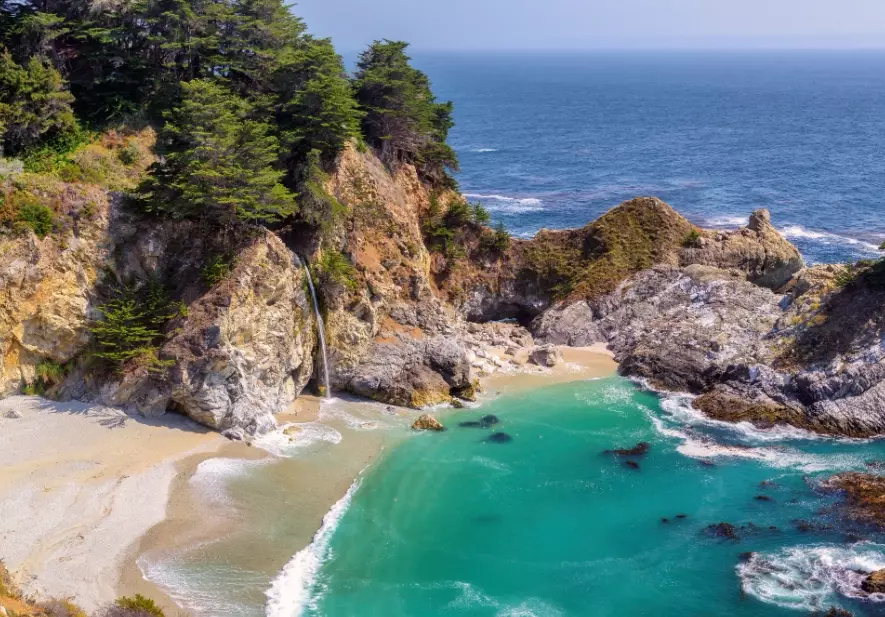
- San Francisco (4 days) + Napa Valley or Monterey (3 days): Rent a car after exploring SF. Drive to Napa for wine tasting (1.5 hours) or down Highway 1 to Monterey and Carmel-by-the-Sea (2 hours). This gives you urban and scenic California.
The Single-Region Road Trip. Pick one concentrated area and drive a loop.
Example: Arizona Highlights Loop (7 Days). Fly into Phoenix. Day 1-2: Phoenix/Scottsdale (desert museums, Old Town). Day 3-4: Sedona (red rocks, hiking, drive to Flagstaff). Day 5-6: Grand Canyon South Rim (overnight in Tusayan or Flagstaff). Day 7: Drive back to Phoenix (4.5 hours). This is packed but logical, minimizing backtracking.
With one week, you must accept you're getting a tasting menu, not a full feast. You'll leave wanting more, and that's okay.
The 10-14 Day Sweet Spot: Depth Over Breadth
This is the duration I recommend most often for first-time visitors wanting a classic USA experience. Two weeks lets you connect two major regions without feeling like you live on a plane.
You can tackle a "Coastal Combo" or a "Theme Park & Nature" mix. The rule here is to limit yourself to 3-4 bases total. Every time you change hotels, you lose half a day to packing, travel, and checking in.
Let's say you have 14 days. A classic East Coast itinerary could be: New York (5 nights) → Fly to Orlando (1.5 hr flight) for 4 nights (Disney/Universal) → Fly to Miami/Fort Lauderdale (1 hr flight) for 4 nights (beaches, Everglades day trip). You get three distinct flavors: metropolis, fantasy, and tropics.
A West Coast alternative: Los Angeles (4 nights) → Fly to Las Vegas (1 hr flight) for 3 nights → Drive to Grand Canyon/Sedona (3 nights) → Fly home from Phoenix. This mixes glamour, spectacle, and natural wonder.
The 10-14 day window allows for 2-3 internal flights or one major flight and a focused road trip segment. It's the minimum I'd suggest for a trip that feels substantial rather than rushed.
The 3-Week Epic: Cross-Country or Immersive Exploration
Three weeks or more unlocks the true potential of a USA trip. Now you can realistically consider a cross-country journey or deeply explore one massive region like the National Parks of the Southwest or the entire Pacific Coast.
The Classic Coast-to-Coast Road Trip: This is the dream, but it's a marathon. Los Angeles to New York via a southern route (I-40 past Grand Canyon, Albuquerque, Nashville) is roughly 2,800 miles (4,500 km). Driving 5-6 hours a day, you'd need about 10 days just for the driving legs. That leaves 10-11 days for stops. So a 3-week timeline is the minimum for this. You'd spend it roughly 40% driving, 60% exploring. Be honest with yourself—do you enjoy long drives?
The Deep Dive: A more relaxed and arguably richer use of three weeks is to pick a quadrant of the country. For example:
- The Pacific Northwest: Seattle, Olympic National Park, San Juan Islands, Portland, Oregon Coast, Crater Lake, Columbia River Gorge.
- The South: Atlanta, Charleston, Savannah, New Orleans, Nashville, Great Smoky Mountains.
With this much time, you can stay 3-4 nights in some places, take a day to just read a book in a park, or follow a local's recommendation for a hidden hike without derailing your plan. Pace is everything.
Beyond the Itinerary: The Hidden Time Costs
This is where most online itineraries fail. They list attractions but ignore the connective tissue that eats your day. As someone who's missed a dinner reservation due to underestimating this, trust me.
Airport & Flight Time: For domestic flights, plan on a minimum of 4 hours door-to-door. That's 1 hour to the airport before a domestic flight, 1-2 hour flight, 30-45 minutes to deplane and get luggage, and 30-60 minutes to your next hotel. A "quick one-hour flight" often consumes half a day.
Car Rental Logistics: Renting a car can take an hour from landing to driving away, especially at major airports or if you're unfamiliar with the process. Returning it takes time too. Factor this in.
Parking & City Traffic: In cities like San Francisco, Los Angeles, or New York, finding parking can take 30 minutes and cost $40-$60 per day. Sometimes it's faster and cheaper to use ride-shares or public transport, even if you have a car for the rest of your trip.
Jet Lag: If you're coming from Europe or Asia, your first 48 hours will be at reduced capacity. Don't schedule a demanding, pre-booked activity for your first morning. Give yourself a light, flexible day to adjust.
Putting It All Together: Sample Trip Plans
Here are concrete templates showing how the days break down for different goals. These factor in the hidden time costs.
| Trip Focus | Ideal Duration | Core Destinations | Key Transport | Who It's For |
|---|---|---|---|---|
| First-Time Icons | 12 Days | New York, Washington D.C., Orlando | 2 Flights (NYC→D.C., D.C.→Orlando), Train (NYC-D.C.) | Families, first-time visitors wanting classic sights |
| Western Nature & Parks | 14-16 Days | Las Vegas, Zion, Bryce, Page (Antelope), Grand Canyon, Sedona | One-Way Car Rental (Vegas to Phoenix) | Outdoor enthusiasts, photographers, road trip lovers |
| California Dreaming | 10 Days | San Francisco, Napa/Sonoma, Monterey, Big Sur, Los Angeles | One-Way Car Rental (SF to LA) | Foodies, wine lovers, scenic drive fans |
| The Great American Road Trip | 21 Days | Chicago, Mt. Rushmore, Yellowstone, Salt Lake, Las Vegas, Grand Canyon, LA | Cross-Country Car Rental (Chicago to LA) | Adventurers with ample time, wanting the full classic USA experience |
The Expert Corner: Mistakes I See All The Time
After helping people plan trips for years, patterns emerge. Here's the subtle stuff that ruins trips.
Mistake 1: The "Just a Drive-By" Mentality. People see on a map that Bryce Canyon and Zion National Parks in Utah are only 1.5 hours apart. "Great," they think, "we'll see both in one day." Reality: You need at least 3-4 hours to even begin to appreciate Zion's main canyon (shuttle system included), and another 2-3 for Bryce's main viewpoints. With driving, that's a 7-8 hour day, exhausting and superficial. You saw them, but you didn't experience them. Give major parks a full day minimum.
Mistake 2: Underestimating City Scale. "We'll do the Statue of Liberty, Empire State Building, and a Broadway show on Tuesday." In New York? That's a logistical nightmare involving downtown, midtown, and evening timing, with huge chunks lost to subway rides and security lines. You'll be stressed and late. Group activities by neighborhood. Do Lower Manhattan (Statue of Liberty, 9/11 Memorial) one day, Midtown (Empire State, Times Square) another.
Mistake 3: Booking Non-Refundable Hotels in a Chain. Life happens. A flight gets cancelled, you love a place and want to stay longer, you hate a place and want to leave. Locking yourself into a rigid, pre-paid hotel chain across the country removes all flexibility. I always recommend booking at least the first few nights, then leaving later accommodations as refundable or book a day or two in advance as you go. It's liberating.
Your Burning Questions Answered
Budget: $100-150 per person per day (hostels, fast food, buses, free attractions).
Mid-Range: $200-350 per person per day (decent hotel/motel, sit-down meals 1-2x/day, rental car, paid attractions).
Comfortable: $400+ per person per day (nice hotels, good restaurants, tours, convenience).
Major cities (NYC, SF) and popular park gateways will be at the top end of these ranges. A rental car adds $70-$120/day with gas and insurance. Food is a big variable—a casual lunch can be $15, a nice dinner $50+ per person.
So, how many days should you spend in the USA? Start by asking yourself what you really want from this trip. Is it a whirlwind of iconic sights? A deep connection with a place? An epic road trip story? Match your duration to that goal, then add a buffer day for the unexpected. It's better to see less and remember more than to see it all and remember only the stress. Plan smart, travel slow where you can, and give yourself permission to leave things for next time. The USA isn't going anywhere.





Comments
Leave a Comment