Let's cut to the chase. You're planning a trip to the United States and staring at a map that feels impossibly large. The question "How many days do I need?" pops up, and every generic travel site gives you the same vague, useless answer: "It depends." Thanks, I know it depends. I want to know what it depends ON, and what that means for MY trip. I've planned trips for first-timers, road trip fanatics, and even my own parents who thought they could "do" California in four days (a disaster we still laugh about). So, here's the real, no-fluff breakdown based on what you actually want to do, not just a random number.
The short, honest truth? There's no magic number. A fantastic 5-day city break is possible. A barely-scratch-the-surface 3-week coast-to-coast trip is also possible. The key is matching your ambition with reality—budget, pace, and personal travel style. Most people underestimate distances and overestimate how much they can enjoy while sprinting.
Your USA Trip Blueprint: Jump to What Matters
The Realistic Timeline: How Many Days for Different USA Trips
Forget "seeing America." What does that even mean? Let's get specific. Your ideal trip length swings wildly based on your chosen style.
The Single-City or Regional Deep Dive (5-10 Days)
This is my favorite way to travel, and often the most rewarding. You pick one major city and its surrounding area, and you actually get to know it.
East Coast Example: New York & Surrounds (7-9 days ideal)
- Days 1-4: Manhattan core. This includes the major museums (Met, MoMA), Central Park, Broadway show, Statue of Liberty, and neighborhoods like Greenwich Village and Williamsburg across the bridge in Brooklyn. A common mistake? Trying to do the Empire State Building, Top of the Rock, and One World Observatory all in one trip. Pick one view; they're all stunning and doing more is a waste of money and time.
- Days 5-6: Day trips. The train to Philadelphia (1.5 hrs) for history, or to Washington D.C. (3.5 hrs on the Acela) for the Smithsonian museums (which are free, by the way).
- Day 7+: Buffer/explore deeper. Maybe a day in Brooklyn's DUMBO and Park Slope, or a trip up the Hudson Valley.
West Coast Example: San Francisco & Bay Area (5-7 days minimum)
People allocate two days for San Francisco and wonder why they're exhausted. The city is deceptively hilly and spread out.
- You need a full day for Fisherman's Wharf, Alcatraz (book tickets weeks ahead on the National Park Service site), and a ferry ride.
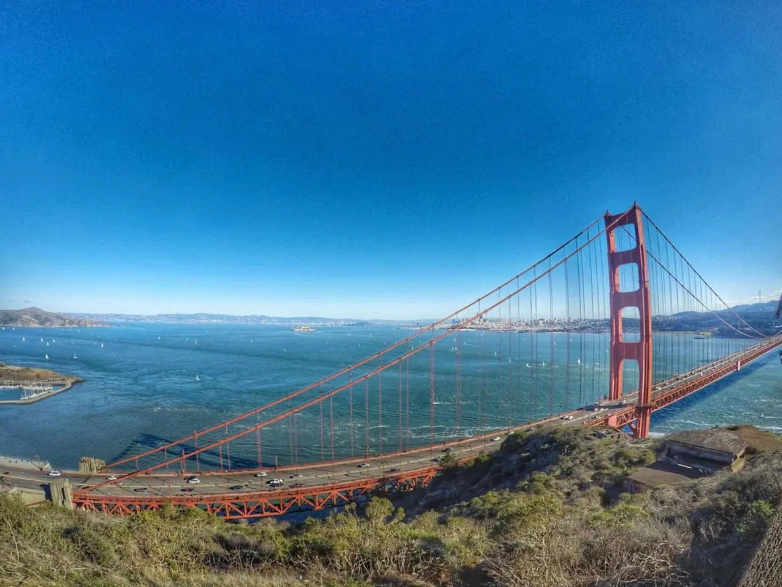
- Another day for Golden Gate Park (the California Academy of Sciences alone can take half a day), the Presidio, and crossing the Golden Gate Bridge.
- A day for neighborhoods: Mission District murals, Castro, Haight-Ashbury.
- Then add a day for a Napa/Sonoma wine country tour, or a day down the coast to Monterey and Carmel.
See how 5 days is the bare minimum to not feel rushed?
The National Park Adventure (7-14+ Days)
This is where people mess up the most. They see a map of Utah's "Mighty 5" parks and think, "One day each!" Terrible idea. You'll spend more time in your car than on a trail.
Expert Reality Check: For a major national park like Yellowstone, Grand Canyon, or Yosemite, plan for a minimum of two full days inside the park. One day is just a scenic drive with a few photo stops—you don't experience it. On day two, you hike, you find quieter viewpoints, you relax. The distance between park gates and major sights can be 1-2 hours of driving. Add travel days to and from the park. A focused trip to just Yellowstone and Grand Teton National Parks easily consumes 7-9 days.
The Epic Cross-Country Road Trip (14-21+ Days)
The classic Route 66 or coast-to-coast dream. You need at least three weeks to make this enjoyable, not a punishing marathon.
- Los Angeles to Chicago (Route 66 core): 14 days is aggressive but doable if you drive 4-6 hours most days. 21 days lets you breathe.
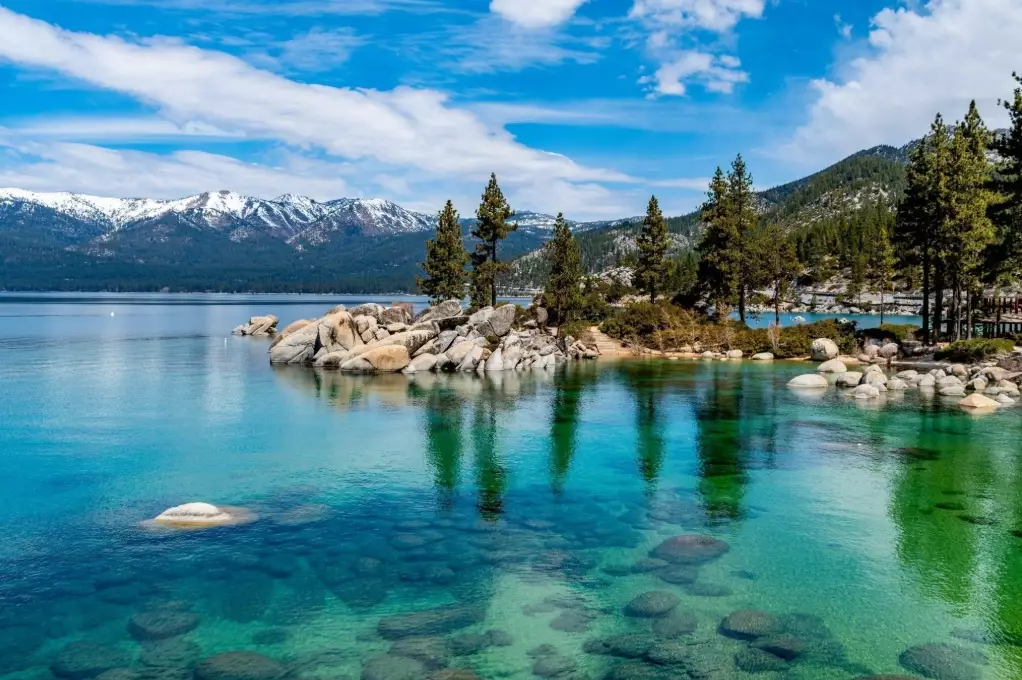
- New York to San Francisco (Northern Route): With stops in Chicago, Badlands, Yellowstone, and Tahoe? 21 days minimum. I'd recommend 24.
The formula isn't about the miles, it's about the stops. For every 5-6 hours of driving, you need a full day (or two) off the road to explore that area. Otherwise, you're just a professional driver on a weird commute.
The "Theme Park" or Specific-Interest Trip (4-10 Days)
Focus is your friend here. Orlando's theme parks (Walt Disney World, Universal) can swallow 5-7 days alone if you want to see the major parks without collapsing. A golf trip to Arizona, a music pilgrimage to Nashville and Memphis, or a food crawl through New Orleans each needs 4-6 days to feel complete.
How to Plan Your Exact Number of Days: A Step-by-Step Filter
Let's build your trip duration. Ask these questions in order.
- What's Your Non-Negotiable? Is it seeing the Grand Canyon? Visiting a friend in Miami? Watching a Broadway show? Pin that on the map and calendar first. That's your anchor.
- Plot Travel Time Realistically. Use Google Maps, but add 20% for gas, food, and rest stops. A flight might be 5 hours gate-to-gate, but with airport transit and security, it burns a full travel day.
- Apply the "One Major Thing Per Day" Rule. A "major thing" is: a theme park, a major museum (the Smithsonian Air and Space Museum), a significant hike (Angels Landing in Zion), or a long scenic drive (Going-to-the-Sun Road). You can pair a major thing with a relaxed evening activity. Trying for two major things leads to burnout.
- Mandate Buffer Days. For every 5-7 days of travel, schedule a half or full day with nothing planned. Jet lag hits. Weather happens. You find a cool neighborhood you want to wander. This buffer is what turns a stressful itinerary into a vacation.
- Budget is a Duration Cap. More days = more hotels, meals, and rental car costs. Be brutal here. A fantastic 10-day trip is better than a stretched, anxious 14-day trip where you're counting pennies.
A Sample 10-Day Itinerary: The Classic West Coast Taster
This is a popular, logical first-timer route for the US West. It's fast-paced but manageable if you're prepared for the pace.
| Day | Base | Focus & Activities | Travel Notes |
|---|---|---|---|
| 1-3 | San Francisco | Arrival, conquer jet lag. Alcatraz, Golden Gate Bridge, Fisherman's Wharf, Chinatown, one neighborhood deep dive (like the Mission). | Book Alcatraz ferry early. Use public transit/cable cars. |
| 4 | Travel Day | Fly from SFO to LAS (1.5 hr flight). Pick up rental car in Vegas. Evening on the Strip. | Flying is far more efficient than driving this leg (8+ hours). |
| 5 | Las Vegas | Vegas pool time, explore hotels, see a show (Cirque du Soleil). | Vegas is a strategic base, not just for gambling. |
| 6 | Day Trip | Grand Canyon South Rim. Long day (4-5 hr drive each way). Walk the Rim Trail, visit Mather Point. | Start by 7 AM. Consider a guided tour to avoid driving fatigue. |
| 7 | Travel Day | Drive from Vegas to Los Angeles (4-5 hours). Stop at the quirky Peggy Sue's Diner near Barstow. | Time your arrival to avoid LA's worst traffic (after 7 PM or before 3 PM). |
| 8-9 | Los Angeles | Day 8: Hollywood (Walk of Fame, Griffith Observatory), Beverly Hills. Day 9: Santa Monica Pier, Venice Beach, maybe a studio tour. | LA is sprawling. Group activities by geography. Rideshare is essential. |
| 10 | Departure | Last-minute souvenir shopping, return rental car, fly out of LAX. | Allow extra time for LAX traffic and security. |
This itinerary is full, but it hits three iconic destinations. To make it more relaxed, cut one destination and spend more time in the other two.
Your Burning Questions, Answered
I only have 5 days total, including travel. Is it even worth going to the USA?
Absolutely, but with a laser focus. Pick one city. Fly into a major hub like New York (JFK/EWR), Miami (MIA), Los Angeles (LAX), or Chicago (ORD). Spend your 3 full days exploring that city and maybe one short day trip. A 5-day New York or Miami trip can be incredibly rich. The mistake is trying to add a second city—you'll lose half a day to travel and feel cheated.
What's the biggest mistake people make when planning their USA trip length?
Underestimating the sheer physical size and travel logistics. They look at a map and think, "Florida and New York are in the same country, how far can they be?" The distance between Miami and New York is about the same as Lisbon to Warsaw. Domestic flights are necessary for cross-country hops, and airport time is a real factor. People also forget to account for jet lag, which can wipe out your first day if coming from Europe or Asia.
Is 2 weeks enough for a first-time USA trip covering highlights?
Two weeks is a great foundation for a first trip, but you must define "highlights." You cannot do New York, Florida, the Grand Canyon, and California in two weeks. You can, however, do a solid East Coast circuit (Boston, NYC, Washington D.C.) or a focused West Coast loop (like the sample above). Two weeks allows you to move at a decent pace between 3-4 key bases without constant packing/unpacking.
How do I balance seeing a lot with not feeling rushed?
The secret isn't fewer destinations; it's longer stays in each. Instead of 1 night in 7 places, do 2-3 nights in 3-4 places. You unpack, you get your bearings, you have a full day to explore without a suitcase in the trunk. Also, schedule "admin days" after long travel segments—a day with just a casual activity and laundry. This rhythm prevents burnout. I learned this after my parents' frantic California trip; now we stay put longer, and we remember the experiences, not just the stress.
Should I prioritize more destinations or more days in fewer places?
For almost everyone, especially first-timers, prioritize more days in fewer places. Depth over breadth. The feeling of truly experiencing a place—finding a favorite coffee shop, talking to a local, wandering without a map—beats the checkbox tourism of snapping a photo and leaving. On a return trip, you can explore a new region. A common regret I hear is, "I wish we'd spent more time in X instead of rushing to Y."
So, how many days do you need in the USA? Start with your travel personality and your non-negotiable must-see. Build outwards with realistic travel times, protect your buffer days, and remember that a deeper experience in one corner of this vast country is always better than a blurry dash across it. Your perfect trip length is the one that leaves you excited, not exhausted, when you get back home.


Comments
Leave a Comment