Your Quick Navigation
Let's be honest. The thought of applying for a U.S. visa can tie your stomach in knots. I remember helping a friend through it years ago, and the pile of paperwork alone was intimidating. The process feels opaque, the rules seem to shift, and the fear of that single-word decision—"Denied"—looms large. You're not just filling out forms; you're essentially asking permission, and that's a vulnerable feeling.
But here's the thing. It doesn't have to be a nightmare. A successful U.S. visa application is less about luck and more about understanding the game. It's about presenting a clear, honest, and convincing case. This guide won't sugarcoat it—the process is demanding. But I'll walk you through every single step, demystify the jargon, and point out the potholes most applicants stumble into. Think of me as that friend who's been through it, ready to pass on the hard-earned knowledge.
We'll start from the absolute beginning: figuring out if you even need a visa. Then we'll dive into the different types, the infamous DS-160 form, the fee maze, the interview preparation, and what to do if things don't go your way. My goal is to make you feel prepared, not panicked.
Getting Started: The Big Picture
Before you spend a dime or lose an hour, you need the 30,000-foot view. The U.S. visa system is a giant tree with two main branches: Immigrant Visas (for those planning to live permanently in the U.S.) and Nonimmigrant Visas (for temporary stays). Since most searches and confusion revolve around temporary visits, that's where we'll focus our energy. The immigrant visa process is a different beast entirely, often sponsored by a family member or employer.
So, do you need a visa?
Not always. The U.S. runs a Visa Waiver Program (VWP) for citizens of about 40 countries. If you're from the UK, France, Japan, Australia, or another participating country, you might just need an ESTA (Electronic System for Travel Authorization) for tourism or business trips under 90 days. It's an online application, costs less, and is usually approved quickly. You can check your eligibility and apply directly on the official ESTA website managed by U.S. Customs and Border Protection. But beware of shady third-party sites that charge double for the same service—always go straight to the source.
If your country isn't on the VWP list, or you plan to stay longer, work, or study, then yes, the U.S. visa application journey begins for you.
A quick story: A colleague once assumed his European passport meant he could go study for a semester without a visa. He confused ESTA with a proper student visa (F-1). That misunderstanding nearly cost him his place in the program. The lesson? Always, always verify your status based on your purpose of travel, not just your passport.
The Visa Type Maze: Picking the Right One
This is arguably the most critical step. Picking the wrong visa type is a fast track to refusal. The code letters (B1, F1, H1B, etc.) aren't just alphabet soup; they define what you're allowed to do. Here’s a breakdown of the most common nonimmigrant visas to cut through the confusion.
| Visa Code | Official Name | Commonly For... | Key Purpose | Typical Max Stay |
|---|---|---|---|---|
| B-1 / B-2 | Business & Tourist Visa | Most individual applicants | Business meetings (B-1), tourism/medical treatment (B-2). Often issued as a combined B1/B2. | Usually 6 months per entry. |
| F-1 | Student Visa | International students | Full-time academic study at a SEVP-certified school. Requires Form I-20 from the school. | Duration of Status (D/S) – as long as you're a full-time student. |
| J-1 | Exchange Visitor Visa | Researchers, au pairs, teachers | Approved exchange programs. Often has a 2-year home residency requirement. | Varies by program. |
| H-1B | Specialty Occupation Visa | Skilled foreign workers | Jobs requiring theoretical expertise (e.g., IT, engineering). Requires employer petition (Form I-129). | Up to 6 years. |
| L-1 | Intracompany Transferee | Managers/executives | Transferring to a U.S. office of the same company. | Up to 7 years. |
See the pattern? Your purpose dictates your visa. You can't use a tourist visa to enroll in a university. You can't use a business visa to work as a software engineer. The consular officer's first question is always, "Why are you going to the United States?" Your visa type must match your answer perfectly.
Pro Tip: If you're just visiting for leisure or to see family, the B-2 tourist visa is your target. If you're mixing a conference with a holiday, you'll apply for the B-1/B-2. The application process for these is identical—it's the same form and interview. The difference is in what you tell the officer you'll be doing.
The Nitty-Gritty: Your Step-by-Step Roadmap
Okay, you've picked your visa type. Now, let's roll up our sleeves. The U.S. visa application process is linear but requires patience. Missing a step can cause delays of weeks or months. Here’s the order of operations.
Step 1: The DS-160 – Your Digital Foundation
This is the cornerstone of your entire application. The Online Nonimmigrant Visa Application (Form DS-160) is a monster of a form. It asks for everything: your life history, travel plans, family, work, and social media handles (yes, really). You complete it on the Consular Electronic Application Center website.
My biggest piece of advice? Be brutally consistent and honest. The information here will be cross-checked during your interview. If you say you worked at Company A from 2015-2020 on the form but mention a different date in the interview, that's a red flag.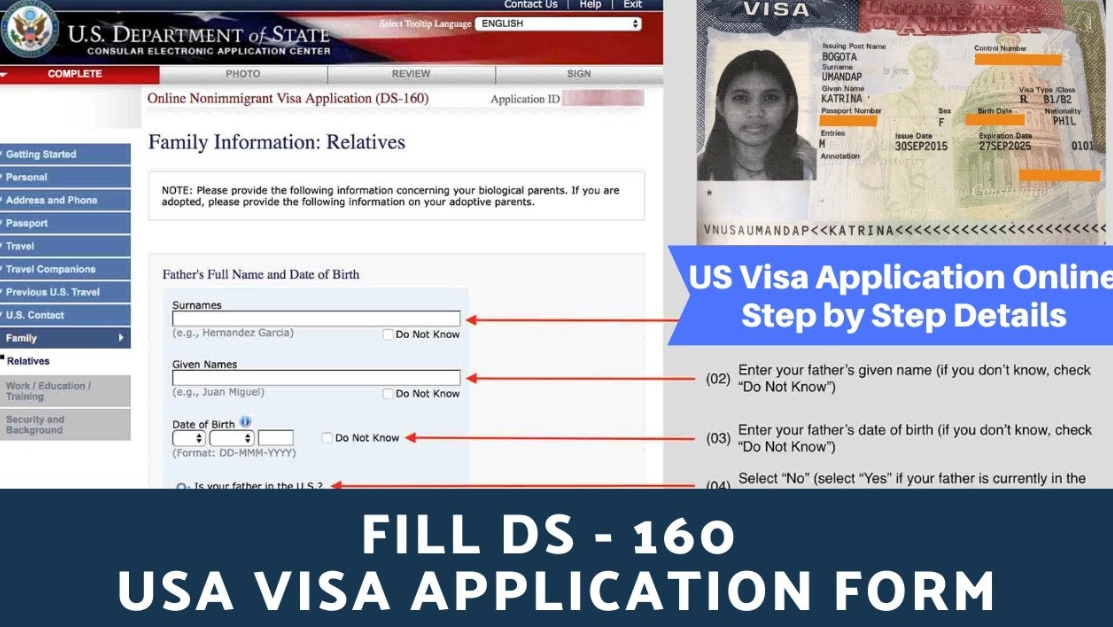
Practical tips for the DS-160:
- Save your Application ID every time you pause. The session times out quickly.
- Have a digital photo ready that meets the U.S. visa photo requirements. No selfies, no filters.
- Answer "Does Not Apply" (DNA) liberally if a question isn't relevant. Don't leave blanks.
- Review every page before submitting. You can't edit it after.
Once submitted, you'll get a confirmation page with a barcode. Print this. You'll need it for your interview. This barcode is the key to your file.
Step 2: Paying the Fees and Booking the Interview
After the DS-160, you go to the U.S. Visa Information and Appointment Services website for your specific country. This is where you'll create a profile, pay the Machine Readable Visa (MRV) fee (non-refundable, typically $185 for a B visa), and schedule two appointments:
- Biometrics Appointment (if required): For fingerprinting at an Offsite Facilitation Center (OFC).
- Consular Interview Appointment: The main event at the U.S. Embassy or Consulate.
Interview wait times can vary wildly—from a few days in some cities to several months in others. Check the estimated wait times on the State Department's website as soon as you start planning.
Watch Out: The appointment website can be glitchy, and prime-time slots disappear fast. Book the first available slot you can reasonably make. You can often reschedule later if you find a better time, but there's no guarantee.
Step 3: Preparing Your Documentary Arsenal
The officer may not look at a single document you bring. But if they ask, you must have it. Your documents are your evidence. Organize them in a clear folder.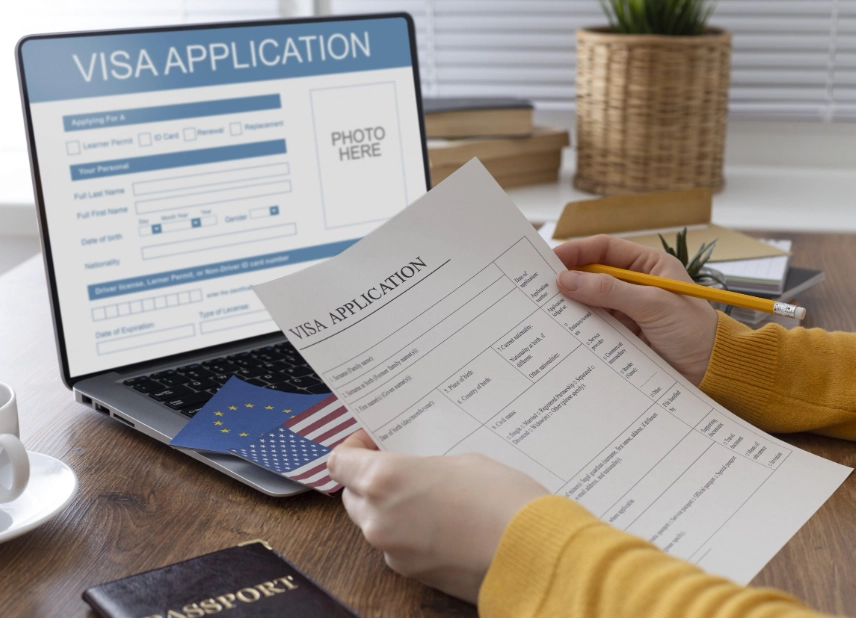
Mandatory Documents (The Non-Negotiables):
- Current passport (valid for at least 6 months beyond your intended stay).
- DS-160 confirmation page.
- Appointment confirmation page.
- MRV fee payment receipt.
- Photo (if you couldn't upload it digitally).
Supporting Documents (Your Proof): This is where you build your case.
- Proof of Ties to Home Country: This is the holy grail. You must prove you have compelling reasons to return. Think: property deeds, a letter from your employer stating your job and leave of absence, proof of business ownership, university enrollment for the next semester.
- Financial Proof: Bank statements (last 3-6 months), tax returns, payslips. You need to show you can afford the trip without working illegally in the U.S.
- Trip Details: A rough itinerary, flight reservation (not a purchased ticket), hotel bookings.
- For Students (F-1): Form I-20, SEVIS fee receipt, academic transcripts, standardized test scores.
- For Work Visas (H-1B, L-1): Approved I-129 petition notice (I-797).
Quality over quantity. A clear property deed is worth more than a stack of old photos.
The Dreaded Interview: What Really Happens
The interview is the moment of truth. It's often just 2-5 minutes. The officer has likely already formed a preliminary opinion based on your DS-160. The interview is to test consistency and resolve any doubts.
What are they looking for? They are legally required to view every applicant as an intending immigrant until the applicant proves otherwise. Your job is to overcome that presumption by demonstrating strong ties to your home country.
Common interview questions:
- Why are you going to the United States?
- Where will you stay?
- What do you do for work? / What will you study?
- How long will you stay?
- Who is paying for your trip?
- Do you have family in the U.S.?
- What are your plans after you finish your studies/visit?
The questions are simple. The subtext is not. "What do you do?" is really asking, "Do you have a stable career to return to?" "Who is paying?" checks for financial solvency and potential reliance on others in the U.S.
My take: The biggest mistake people make is memorizing robotic answers. It sounds unnatural. Practice speaking clearly and confidently about your own life. Be polite, make brief eye contact, and answer only the question asked. Don't volunteer unsolicited information or launch into a long, rehearsed speech.
Possible outcomes right there at the window:
- Approved: The officer will tell you, keep your passport, and explain when/how you'll get it back with the visa stamp.
- Administrative Processing (221(g)): This means more checks are needed. They might give you a blue slip asking for additional documents. It's a limbo state, not a denial.
- Denied: The officer will tell you, cite the section of immigration law (often 214(b) for tourist visas), and return your passport. It's crushing, but it's not the end of the world (see below).
When Things Go Wrong: The 214(b) Denial and Beyond
A denial under Section 214(b) of the Immigration and Nationality Act simply means the officer wasn't convinced you have strong enough ties to your home country. It's not a character judgment, but it feels like one.
It's a gut punch, no doubt about it. The fee is gone. The effort feels wasted.
So, what can you do?
First, understand you can reapply. There's no official cooling-off period. You can fill out a new DS-160, pay the fee again, and book a new interview. But—and this is a huge but—you must address the reason for the first refusal. Reapplying immediately with the exact same documents and story is just donating more money.
You need to build a stronger case. Did you not show enough financial proof? Get more recent, substantial bank statements. Was your job situation unclear? Get a more detailed letter from your employer. Did your travel plans seem vague? Create a concrete, logical itinerary.
Sometimes, waiting for a material change in your circumstances is the best strategy—graduating and getting a job, buying property, getting promoted. These are tangible, improved ties.
A word of caution: Be wary of "visa consultants" who guarantee approval after a denial for a large fee. No one can guarantee a visa. The decision rests solely with the consular officer. Your money is better spent on gathering genuine, stronger evidence.
Wrapping It Up: Your Mindset Matters
Navigating the U.S. visa application process is a marathon, not a sprint. It demands attention to detail, patience, and a thick skin. The system can feel impersonal and frustrating. I've heard stories of seemingly perfect applications getting denied and shaky ones getting through. There's an element of subjectivity.
But you can stack the odds heavily in your favor. Be meticulous with your DS-160. Gather genuine, verifiable documents that paint a clear picture of your stable life back home. Prepare for the interview like it's an important meeting about your own life—because it is. And if you face a setback, try to see it as a request for more evidence, not a final judgment on your character.
Use the official resources. The U.S. Department of State's visa website is the ultimate source of truth for procedures and forms. Your specific U.S. Embassy or Consulate's website will have local instructions.
Take a deep breath. Start early. Be organized. Be honest. You've got this.
Good luck with your application.





Comments
Leave a Comment