Quick Guide
- Getting There and Getting In: The Nitty-Gritty Details
- Navigating the Getty Center Campus: What's Where
- The Art: What to See Beyond the Postcard Favorites
- The Gardens, Architecture, and Views: The Other Half of the Experience
- Practicalities: Food, Facilities, and Making a Day of It
- Common Questions Answered (The Stuff You're Actually Wondering)
- Final Thoughts and Insider Secrets
Let's be honest, when you think of Los Angeles, you probably think of Hollywood, beaches, and traffic. A world-class art museum perched on a hilltop might not be the first thing that comes to mind. But that's exactly what makes the Getty Center Los Angeles such a fantastic surprise.
I remember my first visit. I'd heard about the art, of course. Van Gogh's Irises, Rembrandt's portraits. But what I wasn't prepared for was the feeling of leaving the city behind. You take this quiet tram up the hill, and suddenly you're in this serene, modern complex with views that stretch all the way to the ocean on a clear day. The air feels different. It's peaceful. That transition alone is worth the trip.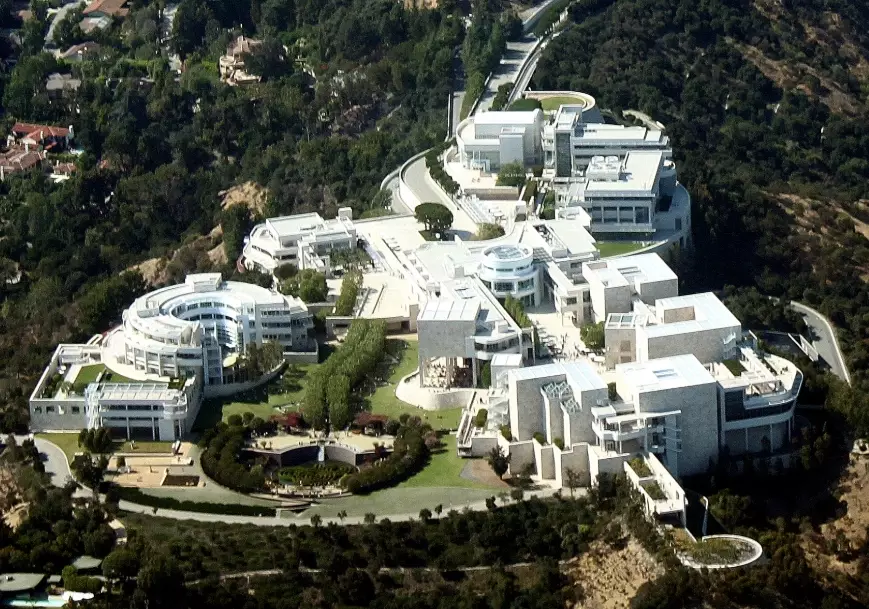
So, what exactly is the Getty Center?
It's not just one thing. It's a sprawling campus designed by architect Richard Meier, home to the J. Paul Getty Museum's post-8th-century European paintings, drawings, sculpture, and decorative arts. It's also home to gorgeous, meticulously designed gardens, jaw-dropping architecture, and some of the best free views in all of Los Angeles. And yes, general admission is free, which in LA feels like finding a twenty-dollar bill in an old jacket.
But here's the thing a lot of guides gloss over. The Getty Center experience can be overwhelming if you don't have a bit of a plan. It's big. The layout, while beautiful, can be a bit confusing at first. And the "free" part has some important caveats, mainly parking. This guide is here to cut through all that and give you the real, practical info you need to have a perfect day there.
Getting There and Getting In: The Nitty-Gritty Details
This is where most of the headaches happen, so let's tackle it first. The address is 1200 Getty Center Dr, Los Angeles, CA 90049. Plug that into your GPS. But knowing the address is only half the battle.
Once you park, you'll head to the tram station. The tram ride up the hill is part of the experience—it's smooth, quiet, and offers those first teasing glimpses of the city below. It runs continuously, so no long waits.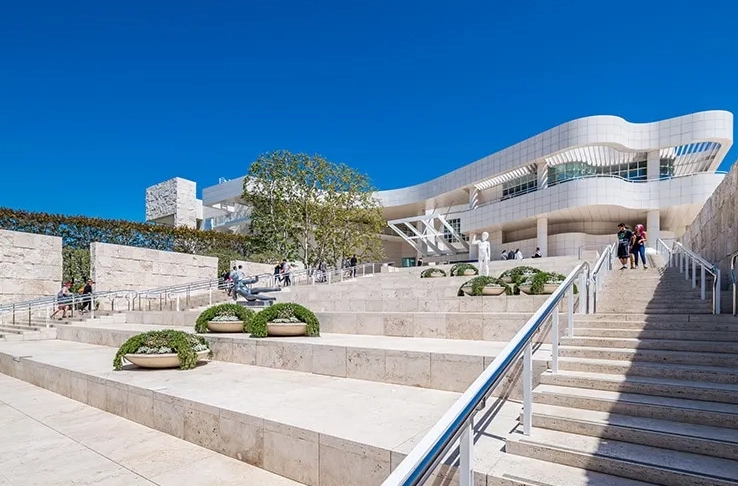
What about public transit? It's an option, but not a super convenient one for most tourists. The Metro 761 bus stops near the entrance on Sepulveda Blvd. You can check current routes and schedules on the LA Metro website. It's cheaper, but factor in a lot more travel time.
Navigating the Getty Center Campus: What's Where
You step off the tram into the Arrival Plaza. Don't just rush into the first building you see. Grab a map from the kiosk (or use the one on your phone) and get your bearings.
The campus is laid out around a central courtyard. The main museum buildings (North, East, South, and West Pavilions) house the permanent collection. They're connected by open walkways and terraces. The separate Exhibitions Pavilion is for special, often ticketed, shows. Then there's the Research Institute, the Auditorium, and of course, the star of the show for many: the Central Garden.
I made the mistake on my first visit of wandering aimlessly. I spent an hour in the North Pavilion before realizing the painting I most wanted to see was in the West Pavilion. A little planning goes a long way.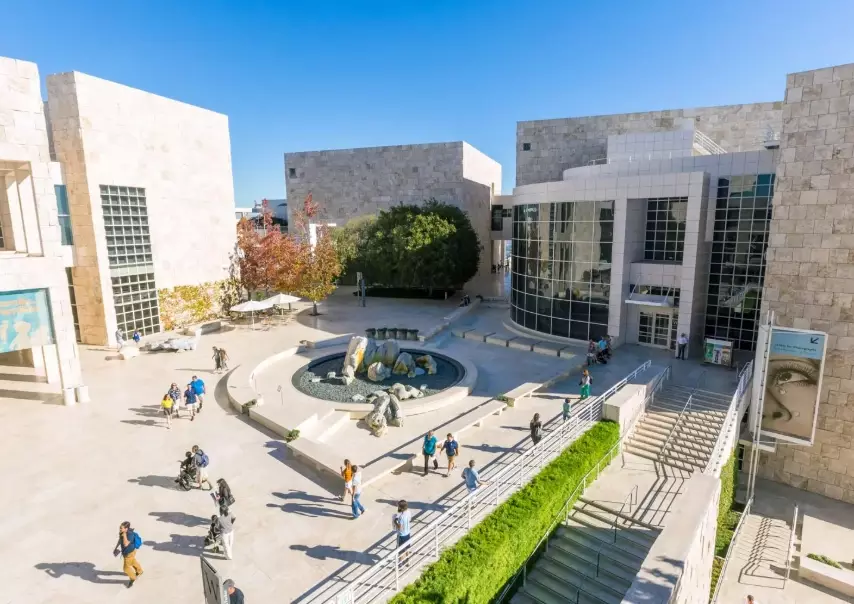
| Pavilion / Area | What You'll Find There | Don't Miss |
|---|---|---|
| West Pavilion | 17th–19th century European paintings & decorative arts. This is the "heavy hitter" zone. | Van Gogh's Irises, Rembrandt's The Abduction of Europa, and stunning French furniture. |
| North Pavilion | Renaissance art up to around 1600. | Italian panel paintings, illuminated manuscripts. |
| East Pavilion | Later Baroque art and 18th-century works. | Gainsborough's Blue Boy (when not on tour), elaborate tapestries. |
| South Pavilion | Neoclassical to early Modern sculpture and decorative arts. | Beautifully crafted European porcelain. |
| Central Garden | A living, evolving work of art by Robert Irwin. | The stream waterfall, the maze of azaleas, and just finding a bench to sit and take it all in. |
| Outer Terraces | Spectacular 360-degree views of LA. | The view west towards the Pacific Ocean (best late afternoon). The view east towards downtown (sparkly at night). |
Honestly, the layout encourages wandering. You'll find yourself popping out of a gallery of solemn 15th-century saints and onto a sun-drenched terrace overlooking the entire basin. It's a wonderful contrast.
The Art: What to See Beyond the Postcard Favorites
Everyone runs to see Van Gogh's Irises. And you should too—it's magnificent. The texture, the vibrancy of the blue against the yellow background. But the Getty's collection is so deep, you'd be doing yourself a disservice to just check the top three off a list.
After you've seen the famous pieces, try this. Pick one room and really look. In the decorative arts galleries, you'll see entire rooms transported from 18th-century French mansions. The level of craft is insane. Look at the marquetry on a desk, the delicate curves of a chair. It tells you as much about that time as any painting.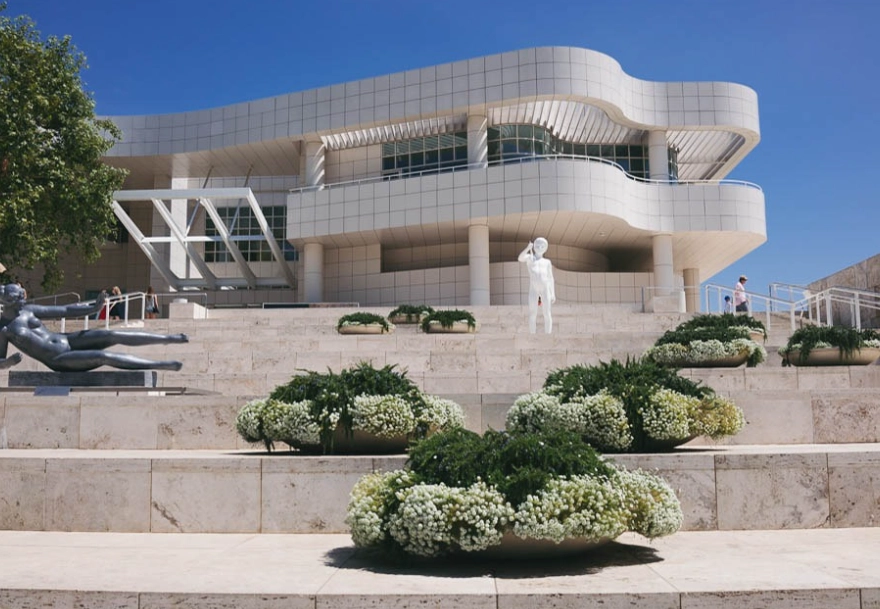
Or, head to the drawings and manuscripts galleries. These works on paper are often more intimate and revealing than the big oil paintings. You can see the artist's hand, the quick sketches, the corrections. It feels personal.
Special Exhibitions: Are They Worth It?
Often, yes. The Getty Center Los Angeles hosts major traveling exhibitions that can be blockbuster events. These usually require a separate, timed ticket (though they are still often free, just reserved).
How do you know if it's for you? Check the exhibitions page before you go. Past exhibitions have covered everything from ancient Assyrian relics to modern fashion photography. If the topic intrigues you, book a ticket. They manage the crowds well, and it's a chance to see something truly unique.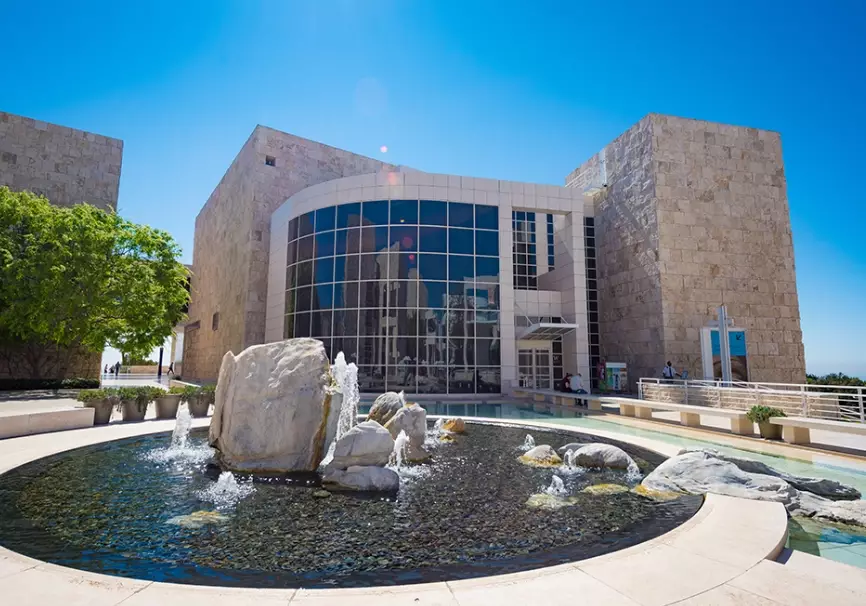
The Gardens, Architecture, and Views: The Other Half of the Experience
If you only care about the art, you're missing at least 50% of what makes the Getty Center special. Richard Meier's architecture, with its travertine stone and sharp geometric lines, is a work of art in itself. The stone was imported from Italy, and it has this warm, honey-colored glow in the afternoon sun. Notice how the buildings frame the sky and the views.
But the masterpiece for me is the Central Garden. It's not your typical manicured French garden. Artist Robert Irwin called it "a sculpture in the form of a garden aspiring to be art." It's wild, colorful, and designed to change with the seasons.
A stream winds down from a waterfall, through a maze of azaleas, and into a pool dotted with floating rings of flowers. The plantings are dense and surprising. You're meant to walk down into it, follow the path, and discover it. Find a stone bench hidden among the foliage and just listen to the water. It's the most peaceful spot in all of LA, I swear.
Walk all the way around the outer perimeter. Each side offers a different vista: the skyscrapers of Westwood and Century City, the rolling hills of Bel-Air, the vast grid of the city stretching to the mountains, and on a smog-free day, the glint of the Pacific. Bring a camera. Or better yet, just put your phone away and look.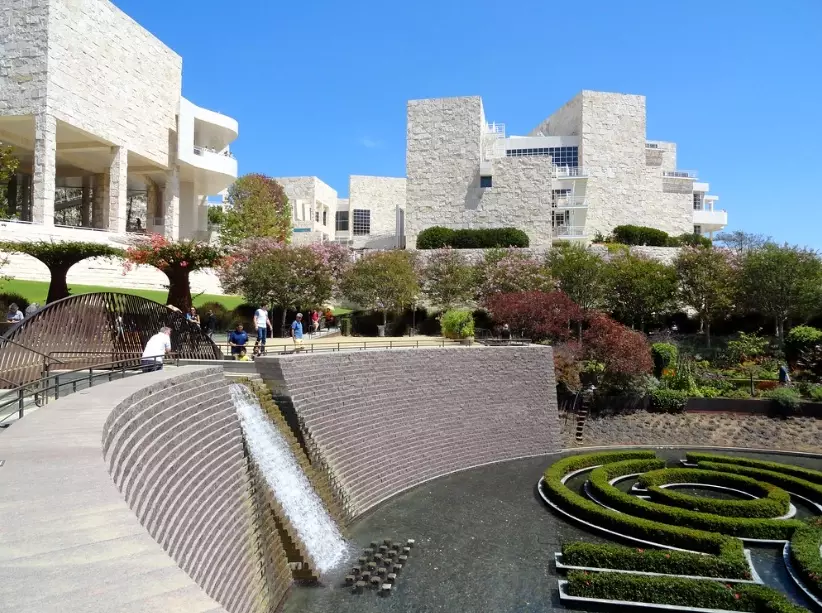
Practicalities: Food, Facilities, and Making a Day of It
You can easily spend 4-6 hours here. So you're going to get hungry.
The Getty Center has a few options. The main restaurant (The Restaurant) has table service, a great terrace view, and prices to match its location (think $25+ for an entree). The food is good, but it's a splurge. The Café is more casual, with cafeteria-style service, sandwiches, salads, and pizza. There's also a coffee cart near the gardens.
Facilities are top-notch—clean restrooms, water fountains, and plenty of benches. The staff and volunteers are universally friendly and knowledgeable. Don't be shy about asking them a question. They often know little secrets, like which gallery has just reopened or where the best light is at that time of day.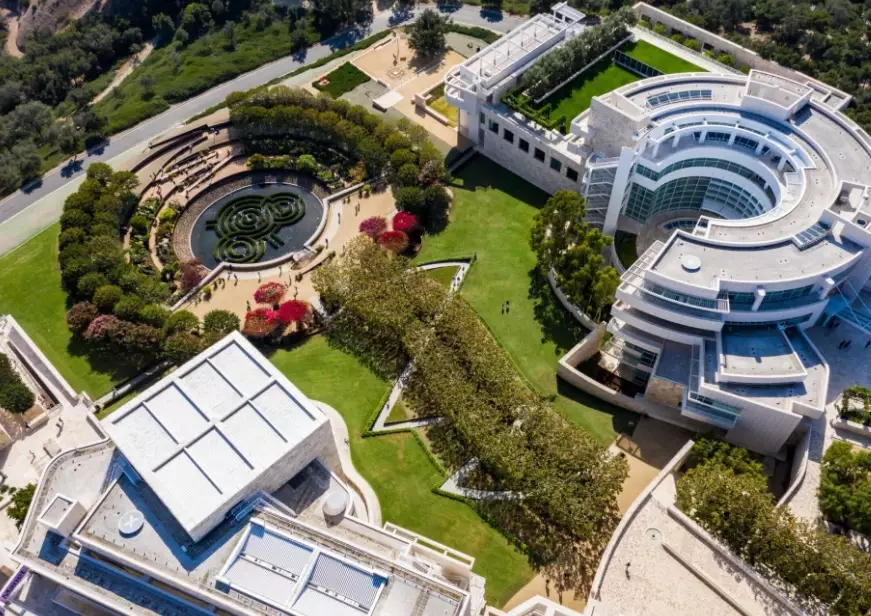
Common Questions Answered (The Stuff You're Actually Wondering)
Final Thoughts and Insider Secrets
The Getty Center Los Angeles isn't just a box you tick on an LA itinerary. It's a place to slow down. The city feels far away. It engages your eyes, your mind, and even your sense of smell in the gardens.
My biggest piece of advice? Don't try to see everything. You'll get museum fatigue. Pick two pavilions you're genuinely interested in. Spend real time in the garden. Plant yourself on a bench with a view and just be there.
So, book your parking, wear good shoes, and go. Experience the Getty Center for yourself. It might just become your favorite thing in LA.




Comments
Leave a Comment